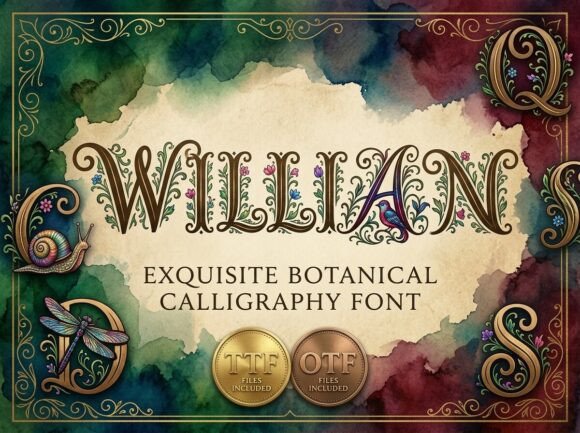
William: The Font That Brings Victorian Garden Charm to Modern Design
Imagine a typeface where every letterform tells a story, where the curve of a 'W' becomes a winding vine and the dot of an 'i' transforms into a delicate blossom. This is the world of William, an ornate floral script font that doesn't just display words—it cultivates them. For designers and brand builders seeking to infuse their work with a sense of timeless elegance and intricate detail, William offers a unique bridge between the artistry of classic illustration and the functionality of modern typography.
A Typeface Rooted in Nature's Blueprint
At its core, William is a display font that draws its personality directly from the Victorian era's fascination with the natural world. Each character is a miniature garden, meticulously crafted with intertwining vines, soft petals, and subtle, hidden motifs. Look closely at the swashes and you might discover a tiny dragonfly resting on a flourish, a snail tracing a path along a baseline, or a butterfly poised on the shoulder of a capital letter. This isn't just a script font; it's an ecosystem of details designed to reward closer inspection.
The visual appeal lies in its ability to balance complexity with cohesion. While the details are rich, the overall flow of the letterforms remains connected and legible at display sizes. It functions beautifully as a premium font for projects where the typography itself is a key visual element. Think of it as a handwritten font with the soul of an engraver—each stroke feels both personal and meticulously perfected.
Where William Blooms: Practical Applications for Creative Projects
The true value of a creative font like William is measured by its versatility in real-world scenarios. Its ornate character makes it a specialist, but a surprisingly adaptable one. Here’s how it can transform various projects:
- Brand Identity & Logo Design: For businesses in the artisan, luxury, or boutique space—think fine perfumeries, high-end chocolatiers, bespoke stationers, or heritage-inspired skincare lines—William can form the cornerstone of a brand identity. A logo set in this typeface immediately communicates craftsmanship, attention to detail, and a story-rich aesthetic.
- Packaging & Product Design: On packaging design, William excels. Use it for product names on botanical teas, artisanal jams, or luxury candle labels. It transforms packaging into an unboxing experience, suggesting the product inside is made with the same care as the lettering on the outside.
- Editorial & Print Materials: In editorial design, it’s perfect for mastheads, chapter titles in coffee table books, or featured quotes in magazines. For print materials like wedding invitations, gala programs, or certificate borders, it adds an unmatched layer of sophistication and ceremony.
- Digital Presence: While primarily a display font, William can create stunning hero text for web design on landing pages for events, luxury products, or creative portfolios. For social media graphics, it makes announcements, quotes, or sale headers feel like curated pieces of art, driving higher engagement through visual distinction.
Cultivating a Cohesive Visual Language
Using a distinctive font like William effectively requires a strategic approach to ensure it enhances rather than overwhelms your message. The goal is to leverage its personality to build visual consistency and strengthen brand recognition.
Readability is Paramount. Because of its intricate details, William is best suited for short, impactful text—headlines, logos, pull quotes, and single lines of emphasis. Pair it with a clean, simple sans serif font for body text. A combination like William with a neutral sans serif (such as Open Sans or Lato) creates a beautiful contrast, allowing the ornate script to shine while ensuring your longer content remains perfectly readable.
Match the Mood to the Goal. Ask yourself: does the project's personality align with elegance, tradition, nature, and luxury? If you're designing for a tech startup or a minimalist brand, William might clash. But for a floral designer, a vintage boutique, or a romantic poetry blog, it’s a perfect match. This alignment between font pairing and project goals is crucial for authentic communication.
Test Thoroughly. Before committing, always test the font in context. How does it look on your chosen background color? Does it remain clear at the size you need to use it? Review all the included font styles—does the family offer a simpler alternate or a set of swashes you can control? This hands-on testing is a non-negotiable step in professional design assets workflow.
Navigating the Details: Licensing and Final Considerations
When you find a commercial font that fits your vision, the final step is understanding its license. William, like many professional typefaces, comes with specific terms that outline how you can use it. Whether you're a freelancer using it for client work or a business incorporating it into your own brand, reviewing the commercial licensing agreement is essential. This ensures you have the rights for your intended applications, be it in digital products, merchandise, or printed materials.
In the end, choosing a typeface is a creative decision that shapes how your audience feels about your project before they read a single word. William offers more than just letters; it offers an atmosphere. It’s for the designer who sees typography as a form of illustration, for the entrepreneur who wants their brand to feel handcrafted and full of hidden stories. By understanding its strengths and applying it thoughtfully, you can use this ornate floral script to create work that feels both deeply classic and exclusively modern.