Blaze: A Typeface That Brings the Heat to Your Design Projects
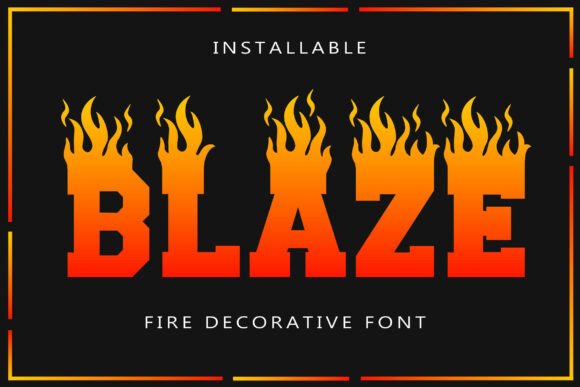
There's a moment in every design project when you need typography that doesn't just sit quietly on the page—it needs to command attention, to crackle with energy, to make people stop scrolling and take notice. That's exactly what Blaze delivers. This isn't your everyday serif or a safe, neutral typeface you'd use for a corporate report. Blaze is a decorative display font built on a heavy, slab-serif foundation that erupts into dynamic, licking flames. It captures the raw intensity of a roaring fire, translating that primal visual power directly into your letterforms.
As someone who's spent years working with clients across automotive, food, and entertainment industries, I can tell you that finding a font with this much personality—one that actually works in real commercial applications—is surprisingly rare. Blaze manages to be both visually explosive and structurally sound, which means you get the drama without sacrificing legibility where it counts.
Understanding the Visual Character of Blaze
At its core, Blaze is a premium font that leans heavily into its slab-serif DNA. The letterforms are weighty and grounded, giving them a solid, confident presence even before you notice the flame details. Those flame elements aren't random embellishments—they're carefully integrated into the character design, creating letter shapes that feel like they're actively burning from within. The overall effect is one of controlled intensity, like a bonfire that's impressive but not out of control.
What makes this typeface particularly interesting from a design perspective is its versatility within a very specific emotional range. You're not going to use Blaze for a meditation app or a children's book (unless that book is about dragons). But within its niche—anything that needs to communicate heat, passion, power, intensity, rebellion, or excitement—it performs exceptionally well. The visual weight ensures it holds its own on busy backgrounds, while the flame detailing adds texture and movement that static fonts simply can't achieve.
Where Blaze Truly Shines: Real-World Applications
Let's talk about where this font actually works in practice, because that's what matters when you're investing in design assets for commercial use.
Branding and Logo Design
If you're developing a brand identity for a hot sauce company, a BBQ restaurant, a motorcycle shop, or an extreme sports brand, Blaze gives you an instant visual shorthand. The font communicates the brand's personality before a customer even reads the words. That kind of immediate recognition is invaluable in crowded markets where you have about two seconds to make an impression. Pair it with a clean sans serif font for body copy, and you've got a brand system that's both striking and functional.
Packaging Design
On shelf, packaging needs to compete with dozens of other products all vying for the same pair of eyes. Blaze excels here because its flame motif naturally draws the gaze and creates a sense of product authenticity. For craft hot sauces, specialty rubs, or energy drinks, the font tells consumers exactly what kind of experience they're signing up for. It's the kind of typography choice that can elevate a small-batch product to look like it belongs next to established national brands.
Posters, Concert Graphics, and Event Materials
There's a reason Blaze feels right at home on a concert poster or a motorsport event flyer. The font carries an inherent sense of spectacle. Heavy metal shows, car meets, tattoo conventions, wrestling events—anywhere the audience expects intensity, this typeface delivers. It works especially well when set large against dark backgrounds, where the flame details become most visible and dramatic.
Social Media and Digital Content
In the fast-scrolling world of Instagram, TikTok, and YouTube thumbnails, Blaze cuts through the noise. Use it for title cards, story overlays, or promotional graphics where you need to stop the scroll. Just be mindful of sizing—this font is designed for display purposes, so it works best at larger point sizes where the details are visible. At small sizes on mobile screens, you'll lose the flame texture, and it might just look like a bold serif, which is fine but misses the point.
Merchandise and Apparel
T-shirt designs, hat embroidery, sticker packs—Blaze has the kind of visual impact that translates well to physical merchandise. The bold, graphic nature of the letterforms means they reproduce clearly even on textured fabrics or at smaller print sizes on items like patches or pins.
Making Smart Typography Choices with a Display Font
Here's some practical advice for anyone considering Blaze for their next project. Display fonts like this one are specialty tools, not workhorses. Think of Blaze as the headline act, not the entire band. You wouldn't set an entire website or a long-form document in this typeface—that would be exhausting to read and would dilute its impact.
Instead, use Blaze strategically for your highest-impact moments: the logo, the hero headline, the event title, the product name on packaging. Then, pair it with something more restrained for supporting text. A clean geometric sans serif font creates a nice contrast, letting Blaze do the heavy lifting while the secondary font handles the details. A simple script font or handwritten font could also work if you're going for a more casual, artisanal brand feel—think craft brewery or small-batch hot sauce with personality.
Before committing to any font pairing, test it out. Mock up your designs at actual size and see how the two typefaces interact. Look at spacing, weight contrast, and overall harmony. The goal is visual consistency—your typography should feel like a cohesive system, not a random collection of fonts that happen to sit on the same page.
Readability and Licensing: The Practical Details
Since Blaze is a decorative display typeface, readability requires some thought. The flame details, while visually striking, do add complexity to the letter shapes. For short, punchy headlines and single words, this works beautifully. For longer phrases or sentences, make sure your audience can parse the words quickly. Test your designs with people who haven't seen them before—fresh eyes will tell you immediately if something is hard to read.
Also, pay attention to the font styles included with your purchase. Some premium fonts come with multiple weights, alternates, or stylistic variations that give you more flexibility. Understanding what's included helps you get the most value from your investment and opens up more creative possibilities.
One final note on commercial licensing. If you're using Blaze for client work, merchandise you plan to sell, or any commercial application, make sure you have the appropriate license. Font licensing can be confusing, but it's important to get it right. Most reputable font foundries offer clear licensing terms—desktop licenses for print work, webfont licenses for online use, and extended licenses for merchandise. Read the terms carefully and purchase accordingly. It protects both you and the font designer who put serious craft into creating the typeface.
Blaze isn't for every project, and that's exactly the point. When you need typography that brings genuine heat and visual intensity to your work—whether that's a logo for a new BBQ brand, a poster for an underground music venue, or packaging for the world's hottest hot sauce—this typeface delivers with conviction. The key is knowing when to reach for it, how to pair it, and how to use its details to maximum effect without compromising the clarity of your message. Get those elements right, and Blaze becomes one of the most memorable tools in your design toolkit.