Tanod: The Modern Sans Serif That Makes Logos Look Premium
There's a particular challenge in logo design that many people underestimate. You need a typeface that feels substantial, memorable, and expensive without relying on ornate flourishes or overused trends. Something that communicates authority the moment someone reads it. Tanod was built with exactly this problem in mind, and it solves it with a precision that's worth understanding if you care about how your brand shows up in the world.
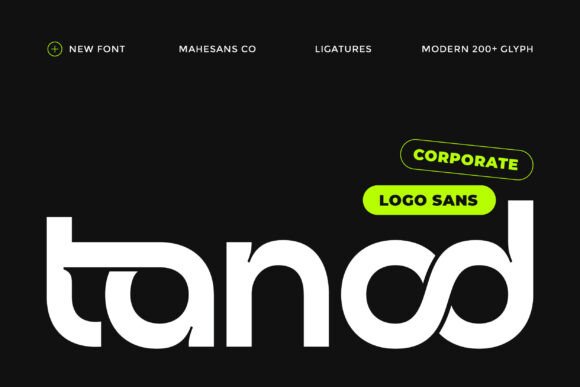
At first glance, Tanod looks like a clean geometric sans serif. But spend a few minutes with it and you start noticing the details. The letterforms carry subtle quirks, slight adjustments in curves and terminals that give the font personality without sacrificing legibility. It's the kind of design work that separates a typeface built by someone who understands branding from one that was just generated to fill space. The characters are sharp and confident, the spacing feels intentional, and the overall rhythm holds together whether you're setting a single word at 120 pixels or a full paragraph at 11.
Why Geometric Structure Matters More Than You Think
Geometric sans serifs have been around for nearly a century. Futura, Avant Garde, Avenir—they all follow a similar logic of building letterforms from circles, squares, and clean lines. What sets a font like Tanod apart is how it handles the tension between geometric purity and visual warmth. Too geometric and the text feels cold, robotic, forgettable. Too soft and it loses the sharpness that makes logos stick in someone's memory.
Tanod threads this needle well. The lowercase letters maintain consistent proportions that feel mathematical, but the uppercase set has enough variation in stroke width and terminal angles to avoid that cookie-cutter feel. If you've ever set a logo in a generic sans serif and felt like it looked flat or interchangeable, that's usually because the font was too uniform. Tanod avoids that trap by introducing just enough character to keep things interesting without tipping into novelty territory.
This matters for practical reasons. When someone sees your logo on a website header, a business card, a social media post, or printed on packaging, they're processing it in fractions of a second. A typeface that holds attention at large sizes and stays clear at small ones does real work for your brand recognition. That's not a theoretical benefit. It's the difference between someone remembering your name and someone scrolling past it.
Real Applications Beyond the Logo File
Here's something many designers and business owners learn the hard way: a font that looks great in a logo doesn't always work well in other contexts. You pick a beautiful display typeface for your brand mark, then try to use it on your website or in a presentation and suddenly everything feels off. The proportions are too wide for body text, the weights don't scale down gracefully, or there simply aren't enough styles to create a proper hierarchy.
Tanod was designed to function across a full branding system, not just as a one-trick logo font. That means you can use it confidently in multiple places:
- Website headers and navigation where clean legibility at screen sizes is essential
- Social media graphics where bold, confident type needs to read clearly on small phone screens
- Packaging design where the font has to look refined on physical materials at various scales
- Editorial layouts and blog posts where sustained readability matters as much as style
- Marketing assets like pitch decks, email headers, and digital ads where consistency builds trust
- Print materials including business cards, brochures, and posters where sharpness at any size is non-negotiable
- Merchandise and invitations where the typeface needs personality without competing with the design
- Digital products like app interfaces and PDF guides where clean modern typography supports the user experience
The ability to carry one typeface across all these touchpoints without it feeling repetitive or out of place is a genuine advantage. It simplifies your design decisions and strengthens the visual consistency of everything you produce.
Matching Typography to What You're Actually Building
Choosing the right font isn't just about personal taste. It's about alignment between the typeface's personality and the message your project needs to communicate. A tech startup selling enterprise software has different visual needs than a boutique bakery or an independent magazine. Understanding what a font like Tanod communicates helps you decide whether it fits.
Tanod's visual personality sits in a specific zone. It's modern without being trendy. Professional without being corporate in that sterile, forgettable way. Confident without shouting. If your brand identity needs to project competence, clarity, and a quiet sense of quality, this kind of typeface does heavy lifting. It works particularly well for businesses and creators who want to look established and trustworthy without relying on traditional serif fonts or overly decorative choices.
Think about the brands you admire that feel effortlessly polished. Chances are their typography is doing a lot of that work. A clean, well-proportioned sans serif with subtle personality creates an impression of intentionality. It tells people that someone cared about the details, which translates into trust in the product or service behind it.
Practical Tips for Working with Tanod
If you're considering Tanod for a project, a few practical observations can help you get the most out of it.
Test it at the sizes you'll actually use. A font that looks stunning at 72 points on your screen might behave differently at 14 points in a paragraph or 300 pixels on a billboard mockup. Set sample text at multiple sizes and check how the letter spacing, weight, and legibility hold up. Tanod was designed to perform well across this range, but your specific application always deserves a real-world test.
Explore font pairings deliberately. While Tanod works beautifully on its own, pairing it with a complementary typeface can add depth to your designs. A classic approach is matching a geometric sans serif with a humanist serif for body text, or pairing it with a script font for accent elements like quotes or callouts. The key is contrast without conflict. You want the two fonts to feel like they're having a conversation, not competing for attention.
Pay attention to the included styles. Most premium fonts come with multiple weights and sometimes alternate characters or stylistic sets. Before you commit to a typeface for a branding project, review the full family. Do you have enough weight variation to create proper hierarchy between headings, subheadings, and body text? Are there italics for emphasis? Does the font support the character sets you need? These details matter when you're building a system that needs to scale.
Consider licensing carefully. If you're using Tanod for commercial work, whether that's client projects, your own business, or products you sell, make sure you understand the licensing terms. A commercial font license protects both you and the type designer. It's a small investment that ensures your brand assets are legally sound, which matters more than most people realize until something goes wrong.
The Quiet Power of Getting Typography Right
Most people won't consciously notice great typography. That's actually the point. When a font does its job well, the message comes through clearly. The brand feels cohesive. The design looks intentional. There's a subtle but real difference between a business that uses thoughtful, well-chosen typography and one that defaults to whatever came pre-installed on their computer.
Tanod represents a specific philosophy in modern type design: build something clean, give it enough personality to be memorable, and make it versatile enough to work everywhere. For designers building brand identities, entrepreneurs launching new ventures, or anyone who understands that visual presentation affects how people perceive quality, that philosophy translates into a genuinely useful design asset.
The font won't do all the work for you. No single typeface can fix a weak brand strategy or compensate for poor design decisions. But when the rest of your visual system is thoughtfully constructed, a typeface like Tanod becomes the thread that ties everything together. It gives your brand a voice that's consistent, professional, and distinctly yours across every surface where your name appears.