Elm: A Typeface Woven from the Deep Forest
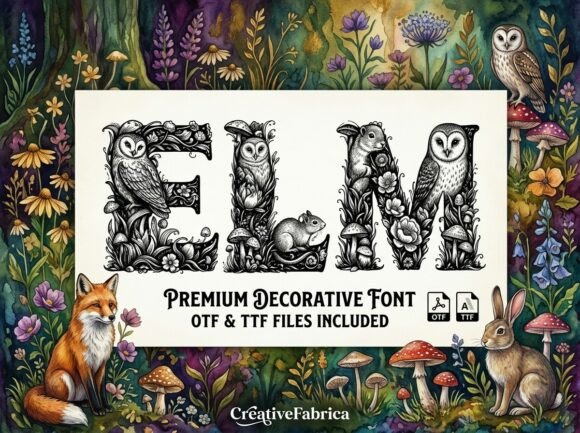
Imagine unearthing a forgotten storybook, its cover worn but still shimmering with enchantment. The letters on the title page aren't merely printed; they're alive. An "O" peers back at you with the watchful eyes of a barn owl, the tail of a "Q" curls like a fox's brush, and the dot of an "i" is a tiny, perfect acorn. This is the world of Elm, a premium decorative typeface where typography transcends simple communication and becomes a portal. It’s not just a font; it’s a meticulously crafted ecosystem of illustration, designed for projects that need to whisper of magic, wonder, and the quiet secrets of the woods.
A Typeface with a Woodland Soul
What sets Elm apart from other display fonts is its foundational concept. Each character is a miniature composition of forest flora and fauna. Twisting ivy forms elegant serifs, a curious squirrel might be perched on the crossbar of an "H," and mushrooms spring up as whimsical punctuation. This isn't clip art glued onto letters; it's a masterclass in illustrative typography where the creature or plant is integral to the legibility and form of the glyph. The result is a typeface with immense depth and storytelling power. For designers and creators, this means your headline or logo doesn't just capture attention—it holds it, inviting the viewer to look closer and discover new details. It’s a font that builds an instant brand identity steeped in narrative, perfect for any project aiming for a "forest-aesthetic" or storybook feel.
Practical Magic: Where Elm Truly Shines
The true value of a premium font like Elm lies in its application. It’s a specialized tool, and using it effectively can elevate a project from good to unforgettable. Think beyond the obvious. Yes, it’s stunning for the title of an independent fantasy novel or a children's book about woodland adventures. But its potential extends much further into the realms of branding and visual communication.
- Brand Identity & Logo Design: A boutique tea company specializing in herbal blends, a children’s forest school, a sustainable candle maker, or a bed-and-breakfast nestled in the woods could use Elm for their logo. It instantly communicates values of nature, craftsmanship, and whimsy. Pair it with a clean, neutral sans serif font for body text to create a balanced and professional font pairing.
- Packaging Design: Imagine Elm on the label of a jar of artisanal honey, the band around a bar of goat milk soap, or the box for a seed packet. It transforms ordinary packaging into a keepsake, telling a story of the product's natural origins before the customer even opens it.
- Social Media & Digital Presence: In a crowded feed, Elm is a scroll-stopper. Use it for Instagram story headers, Pinterest pin titles, or YouTube thumbnails for channels focused on fantasy, gardening, nature walks, or cozy living. It creates a cohesive and enchanting visual identity that boosts brand recognition and audience engagement.
- Print & Merchandise: From whimsical nursery wall art and event posters for a local fair to unique merchandise like tote bags, mugs, or enamel pins, Elm adds a handcrafted, illustrative quality that feels personal and premium. It’s also ideal for invitations to a themed birthday party or a rustic-chic wedding.
Mastering the Forest: Tips for Effective Use
A typeface as detailed as Elm requires a thoughtful approach to maintain readability and professional presentation. Its power is in its impact, which means it’s best suited for headlines, logos, and short bursts of display text—not for lengthy paragraphs or body copy. Here’s how to use it wisely:
First, always consider context and scale. Elm’s intricate details need room to breathe. Using it at a very small size will cause the illustrations to blur into an indistinct mess, harming legibility. It demands to be seen, so reserve it for situations where it can be displayed large and clear. Second, the art of font pairing is crucial. To let Elm be the star, pair it with a simple, highly readable serif font or sans serif font for supporting text. A combination like Elm with a classic serif like Garamond or a clean sans serif like Montserrat creates a beautiful hierarchy that guides the reader’s eye without causing visual chaos.
Finally, always review the full character set and any included styles. A font like Elm may come with alternates, ligatures, or additional illustrative elements that can add even more custom flair to your design assets. Before committing to a commercial project, ensure you understand the licensing terms to guarantee your use is compliant, whether it’s for a small business or a large-scale marketing campaign.
Beyond the Font: Building an Enchanted World
Ultimately, Elm is more than a collection of glyphs; it’s a catalyst for creativity. It encourages you to think about your project’s story. What tale does your brand want to tell? What feeling should your editorial design evoke? By choosing a typeface with such a strong inherent personality, you’re making a deliberate choice to step into a specific world—one of deep forests, gentle magic, and timeless stories. It’s a powerful tool for any creative entrepreneur, designer, or hobbyist looking to infuse their work with a sense of wonder and craftsmanship that resonates deeply with an audience seeking authenticity and beauty in the details.