Whiskey Barrel: The Font That Brings the Wild West to Life
There’s something undeniably magnetic about the rugged charm of the Old West. The weathered wood of a saloon door, the bold lettering on a vintage whiskey label, the hand-painted signs of dusty frontier towns—these visual elements carry a story. They speak of authenticity, strength, and a timeless sense of character. For designers and creators looking to capture that spirit, the right typography is essential. A typeface like Whiskey Barrel isn’t just a collection of letters; it’s a direct conduit to that entire aesthetic, offering a powerful tool for projects that demand attention and personality.
Crafting Authenticity with Bold, Handcrafted Letterforms
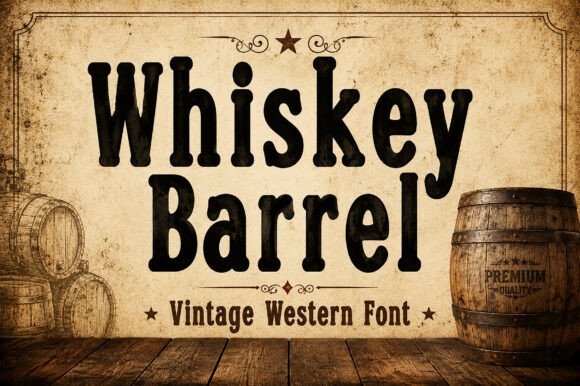
What sets a vintage western display font apart from generic bold typefaces? It’s all in the details. Whiskey Barrel draws direct inspiration from classic saloon signage and rustic wood branding. The letterforms are strong and substantial, designed to mimic the look of hand-carved or painted letters. You’ll notice subtle imperfections and rugged edges that give it an authentic, handcrafted feel—something that sterile, digital-perfect fonts often lack. This isn't a font trying to be retro; it's a font that feels like it was lifted straight from a wanted poster or a barrel head. Its serif structure is assertive yet classic, making it a premium font choice for anyone needing to inject a dose of Americana into their work.
For a small business owner running a craft distillery, a BBQ joint, or a leather goods shop, this type of visual consistency is gold. Using Whiskey Barrel across your logo, menu, and packaging creates an instant and cohesive brand identity. It tells customers exactly what to expect before they even interact with your product: something authentic, crafted with care, and full of character. The font does the heavy lifting of brand storytelling, establishing a rugged vintage personality that’s difficult to achieve with more common sans serif or script fonts.
From Saloon Signs to Social Media: Practical Applications
The versatility of a well-designed display font like this is often underestimated. While it’s perfect for the obvious applications, its real value lies in its ability to elevate a wide range of creative projects. Think beyond the logo. A content creator filming a cooking series on campfire cuisine or a homesteading vlog could use Whiskey Barrel for their intro title cards and chapter markers, instantly setting a thematic tone. A blogger writing about historical fiction, hiking trails, or craft spirits can use it for standout pull quotes and blog headers to break up text and engage readers visually.
For marketing professionals and entrepreneurs, the applications are equally broad. Consider these real-world uses:
- Event Branding: Creating posters, tickets, and social media graphics for a country music festival, a rodeo, or a western-themed wedding. The font’s bold style ensures visibility and sets the mood immediately.
- Packaging & Labels: Designing labels for a hot sauce, a craft beer, or artisanal coffee. It communicates a product that’s bold, traditional, and worth trying. This is where typography directly influences purchasing decisions on a crowded shelf.
- Merchandise & Apparel: Designing t-shirts, hats, and stickers for a brand or an online store. A strong, vintage western typeface is a staple in apparel design because it appeals to a broad audience and has enduring cool.
- Digital Products & Invitations: Adding personality to digital planners, printable wall art, or rustic-themed party invitations. It turns a simple document into a themed experience.
The key is matching the font’s personality to your project’s goal. You wouldn’t use Whiskey Barrel for a corporate law firm’s website, but for a brewery, a mechanic’s garage, or a vintage clothing brand, it’s a perfect fit. It’s about choosing a typeface that speaks the same language as your audience.
Pairing and Readability: Using Whiskey Barrel Effectively
A common pitfall with strong display fonts is overuse. Because Whiskey Barrel has such a distinct personality, using it for large blocks of body text can overwhelm a design and hurt readability. Its strength is in headlines, logos, and short, impactful phrases. The real artistry comes in finding the right font pairing.
For body copy, you’ll want to balance its boldness with something cleaner and more legible. A simple, clean sans serif font like Helvetica, Open Sans, or Lato works wonderfully. The contrast allows the western display font to shine as the hero while the sans serif handles the detailed information without competing. Alternatively, pairing it with a classic serif font like Garamond or Baskerville can create a sophisticated, editorial feel that nods to historical document design.
Always test your pairings in context. Does the combination work on a mobile screen as well as a printed poster? Is the hierarchy clear? Can a reader easily distinguish the headline from the subheading and the body text? The goal is to create a visual system where Whiskey Barrel provides the memorable hook, and your supporting typography ensures the message is delivered clearly and professionally.
Making the Most of Your Investment in Quality Typography
When you choose a premium font, you’re investing in a design asset. A quality typeface like Whiskey Barrel will typically come with more than just the basic uppercase and lowercase letters. Look for features that expand its utility:
- Extended Character Sets: Access to international characters, symbols, and punctuation marks ensures you can use it for a wider range of projects without limitation.
- Alternate Stylistic Options: Some fonts include different stylistic sets or swashes that allow for customization, giving you even more creative control.
- Clear Licensing: This is critical for commercial use. Ensure the license covers your intended use—whether for a single client project, unlimited commercial work, or print-on-demand products. Reputable foundries provide clear, straightforward licensing terms.
Before finalizing a design, always proofread your text with the font applied. Check for kerning (the spacing between specific letter pairs) and make sure all the characters you need are present and look harmonious together. A font with strong, authentic character, used thoughtfully and paired wisely, does more than just display words. It builds a world, tells a story, and connects with an audience on a visceral level. For projects that need to feel bold, rustic, and unmistakably real, that’s an invaluable tool.